
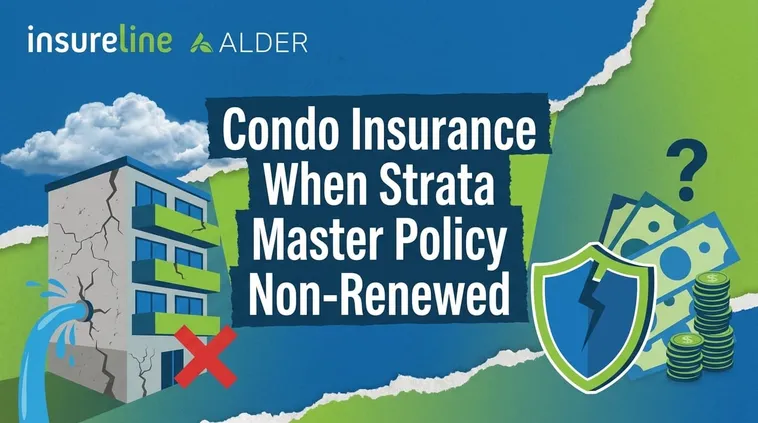
When a strata corporation’s master policy is non-renewed, the building itself has no property insurance. Unit owners often assume their own condo policy automatically fills that gap, but that is rarely true. Understanding exactly what is lost—and what personal condo insurance can cover—is the first step to protecting your unit and your finances.
A non-renewed master policy does not just create a problem for the strata council. It shifts serious financial exposure onto every owner: without the master policy in place, a fire, water escape, or liability claim involving common areas can quickly become a personal loss assessment. The question many owners ask is what happens to your condo insurance if your strata’s master policy is non-renewed, and the answer lies in how the standard unit definition and your own policy interact.
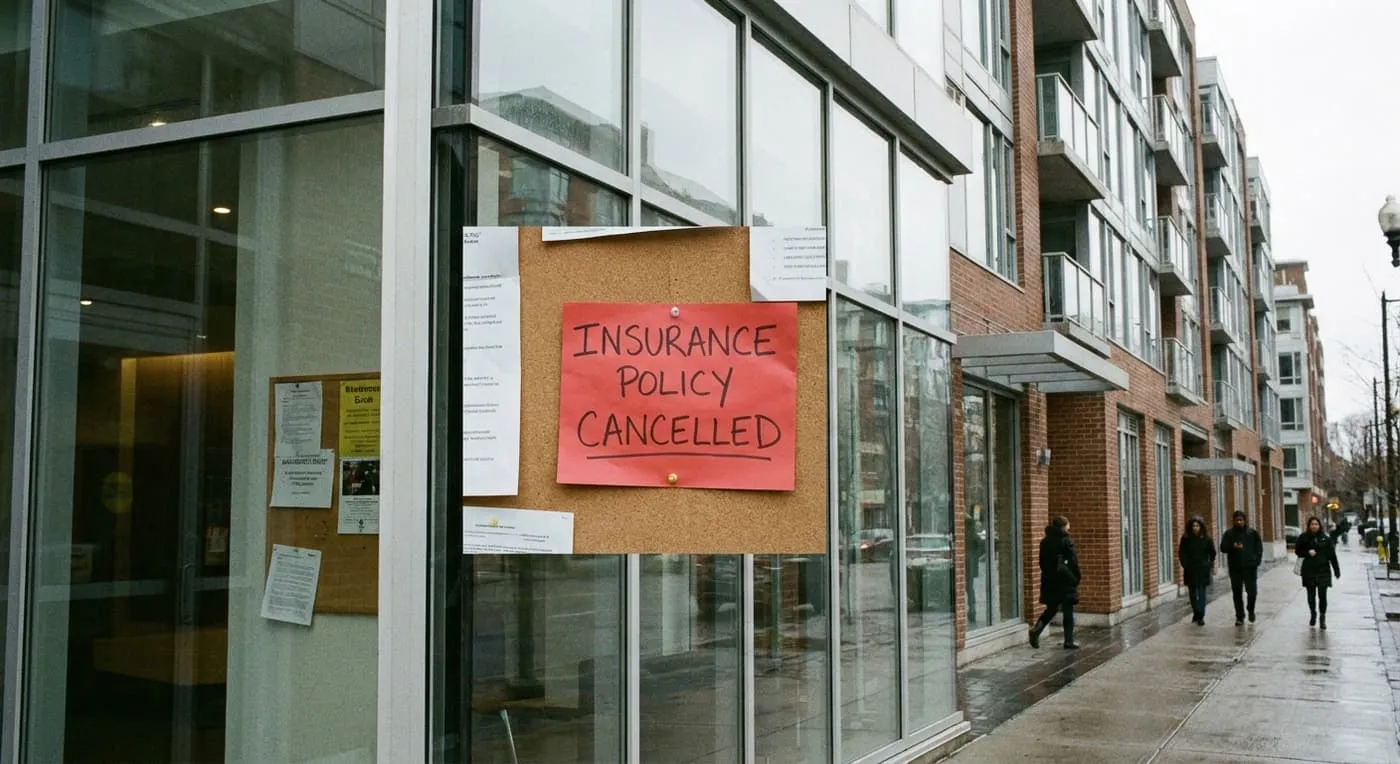
Understanding the Master Policy and Standard Unit Coverage
The master policy is the strata corporation’s own insurance contract. It typically insures the building structure, common property, and the original standard unit finishes inside each residential unit. The exact scope depends on the strata’s standard unit definition, which is usually set out in the bylaws or a separate standard unit schedule.
What the Master Policy Typically Covers
A properly maintained master policy covers major perils such as fire, lightning, smoke, windstorm, hail, explosion, water escape, impact by vehicles, and vandalism. It also normally includes liability coverage for injuries or damage arising from common areas. In many cases, it covers the building’s elevators, roofs, hallways, lobbies, parking garages, and core mechanical systems.
However, the master policy is not designed to cover your personal belongings, improvements you have made beyond the standard unit, or your personal liability inside the unit. Those are left to the unit owner’s own condo policy.
Standard Unit Definition and Its Importance
The standard unit definition describes the fixtures and finishes that would have been present when the building was originally constructed or as defined by the developer. It typically includes things like the original flooring, cabinetry, plumbing fixtures, interior walls, and basic electrical. Any upgrades—such as a renovated kitchen, custom cabinetry, or high-end flooring—are usually not part of the standard unit.
Knowing this definition matters because if the master policy is non-renewed, the strata has no insurance behind the standard unit finishes either. Owners may assume the strata must rebuild everything to the current state, but without a valid master policy, there is no insurer to pay for even the original finishes.
Common Property vs. Unit Interiors
Common property generally includes hallways, lobbies, roofs, exterior walls, elevators, and shared mechanical systems. Unit interiors begin at the boundary of each strata lot, often described by reference to the midpoint of the walls, floors, and ceilings. A well-run strata separates these in the bylaws so owners know which losses fall where.
When the master policy lapses, the strata’s ability to repair common property becomes entirely dependent on the corporation’s cash reserves and the owners’ willingness to pass special assessments. The distinction between common property and unit interiors suddenly becomes a source of dispute because there is no insurance money to pay for either.
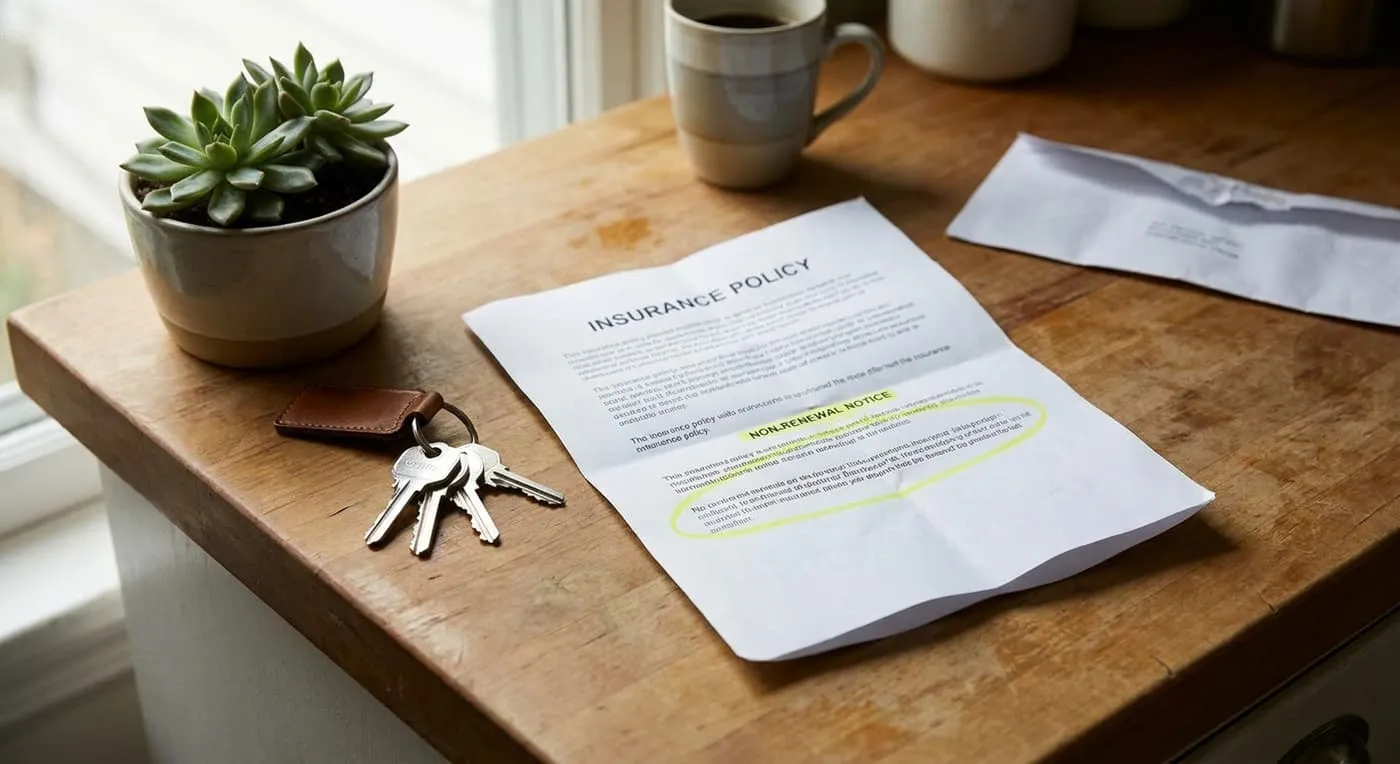
Legal Obligations of Strata Corporations to Maintain Insurance
Strata corporations are not optional about insurance. Under most provincial strata legislation, the corporation must obtain and maintain property insurance on common property, common assets, and units as described in the standard unit definition. It must also maintain liability insurance for the corporation’s operations and directors and officers.
Strata Property Act Insurance Requirements
Under the applicable strata property act, the strata corporation is required to insure buildings and common property against major perils, with coverage at least equal to the replacement value of the insured property. The act also requires the corporation to keep the policy in force without interruption; a lapse is a breach of the corporation’s statutory duty.
The policy must name the strata corporation as insured, and the coverage must extend to the standard unit finishes even though they are inside individual strata lots. This is why the standard unit definition is so important: the legislated insurance obligation is tied to that definition.
Consequences of Non-Compliance for the Strata
If a strata corporation fails to maintain the required insurance, it may be in breach of its statutory duties and its own bylaws. The council members may also face personal liability if they fail to act honestly and in good faith with the care, diligence, and skill of a reasonably prudent person. Owners can demand that the council immediately obtain replacement insurance and may have legal recourse if the council refuses.
More practically, the corporation’s ability to respond to a major loss is destroyed. Without an insurer, the corporation must rely on its contingency reserve fund, which is rarely sufficient to rebuild a damaged building. This leaves owners to pay for the shortfall through special assessments.
Owners’ Rights When the Strata Fails to Insure
Owners have the right to receive notice of the non-renewal, inspect the strata’s insurance certificate, and attend council meetings to question how the lapse occurred. In many jurisdictions, owners can apply to a tribunal or court for an order requiring the strata to comply with its insurance obligations. Owners should document the lapse carefully, including any correspondence from the council.
However, legal remedies take time, and the immediate exposure remains. That is why personal condo insurance with strong loss assessment and additional protection coverages becomes essential during the gap.

Immediate Consequences for Unit Owners When the Master Policy Lapses
The moment the master policy is non-renewed, the building and common property are uninsured. That creates three distinct gaps for unit owners: no coverage for building damage, exposure for common area losses, and financial exposure for standard unit finishes.
No Coverage for Building Damage
If a fire or major water escape damages the building structure, the strata corporation has no policy to respond. The corporation may try to collect a special assessment from owners to fund emergency repairs, but there is no insurer to coordinate the rebuild or pay the bulk of the expense. Owners are effectively self-insuring the entire building envelope, structural frame, and shared systems.
Even a minor common area loss, such as a roof leak that damages several units, becomes a shared expense rather than an insured claim. The master policy’s absence turns every common area event into a potential personal financial loss.
Exposure for Common Area Losses
Common areas such as halls, elevators, parking garages, and amenity rooms are owned collectively. Without the master policy, the strata cannot claim for damage to those areas. Owners may be assessed their share of the repair amount based on unit entitlement, and those assessments can be substantial even for modest damage.
Liability is another concern. If a visitor is injured in a common area, the strata’s liability insurer would normally defend and pay the claim. Without that policy, the corporation may rely on the owners’ personal liability coverages or may face a lawsuit it cannot afford to settle.
Financial Exposure for Standard Unit Finishes
Because the master policy normally covers the standard unit finishes inside each strata lot, a non-renewal removes even that baseline protection. If a fire destroys the original kitchen cabinets, flooring, and walls, the strata has no insurer to restore them. Owners may be assessed for the expense of rebuilding the standard finishes in their own and all other units.
This is a critical point: the standard unit finishes are not automatically covered by an owner’s personal condo policy unless the owner has purchased additional protection. Many owners discover too late that their personal policy only covers their contents and improvements, not the original finishes that the strata was supposed to insure.
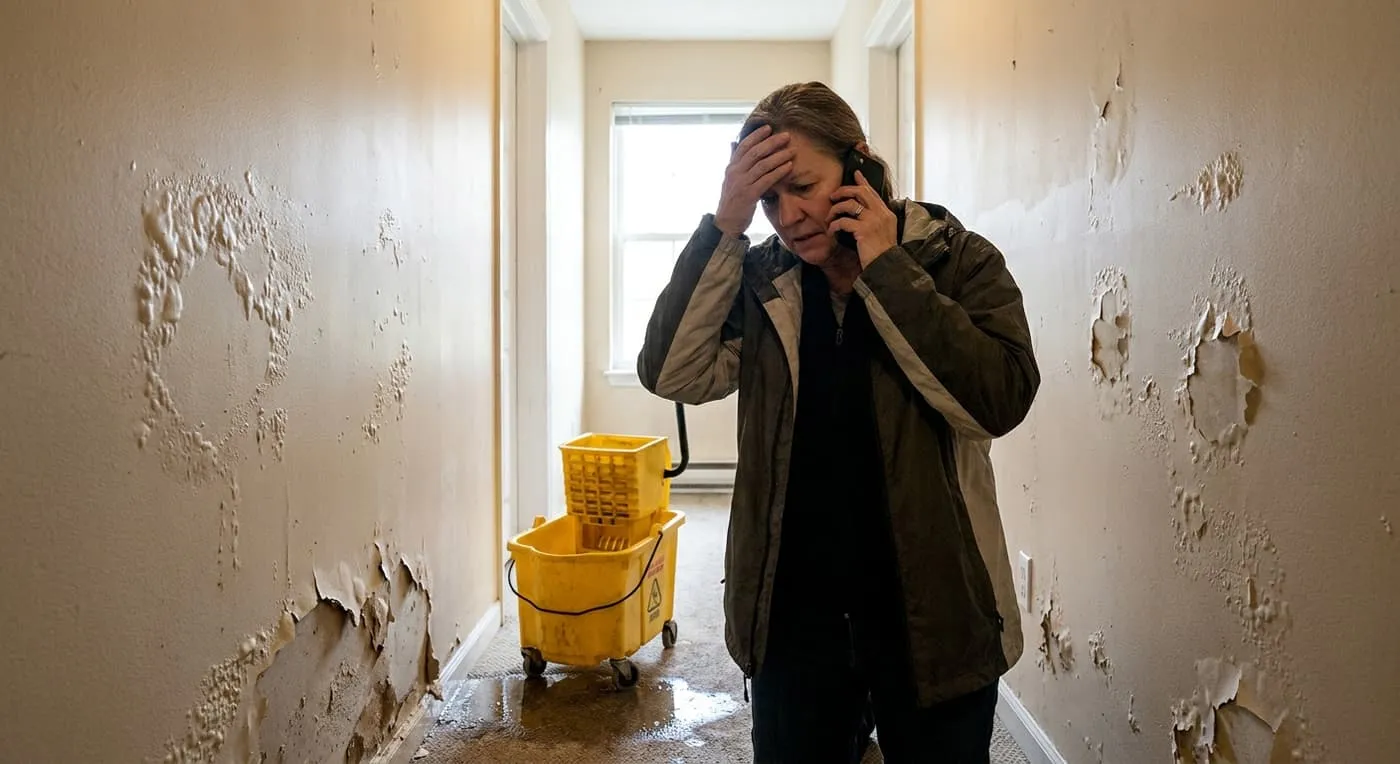
Financial Risks: Loss Assessments and Deductible Responsibilities
When the master policy is absent, financial risk concentrates in two ways: large special assessments for repairs and the possibility of owners being charged for deductibles that the corporation would normally pay.
Potential for Large Loss Assessments
Without insurance, every common area claim becomes a special assessment. Even a relatively small water claim that an insurer would have handled for a deductible may become a five- or six-figure repair bill divided among owners. The lack of an insurer also means there is no claims adjuster to manage the restoration, which can complicate the restoration and delay repairs.
Owners should understand that special assessments can be imposed quickly after an emergency, often without the full picture of what repairs will expense. A properly structured personal condo policy with loss assessment coverage can pay your share of such assessments, subject to its own limits and conditions.
Deductible Payments Without Master Policy
Normally, the strata’s master policy has a deductible. Depending on the bylaws, an owner who causes damage may be responsible for paying part or all of that deductible. Without a master policy, there is no deductible concept for the corporation because there is no claim. However, the corporation may still seek to recover emergency repair expenses directly from an owner whose actions caused the loss.
This means an owner can face a direct repair bill that would normally have been limited to a deductible. Personal condo insurance can often respond to damage the owner accidentally causes to common property, but only if the policy includes the right coverages and limits.
How Personal Insurance Can Offset These Costs
Two personal coverages are especially useful when the master policy lapses: loss assessment coverage and liability coverage. Loss assessment coverage pays your share of a special assessment levied for a covered cause of loss. Liability coverage can respond if you are legally responsible for damage to common property or injury to another person.
We recommend reviewing your policy’s loss assessment limit well before a non-renewal, because the default limit on many condo policies is not designed to cover a full building repair shortfall. Increasing that limit is often straightforward and can bridge a significant financial gap.
Essential Coverages in Personal Condo Insurance to Bridge the Gap
If the strata’s master policy is non-renewed, your personal condo policy becomes your primary safety net. Four coverages matter most: contents, improvements and betterments, additional living expenses, and personal liability.
Contents and Personal Property Coverage
This covers your personal belongings—furniture, clothing, electronics, appliances you own—against insured perils. Even when the master policy was active, it never covered these items. With the master policy gone, your contents coverage becomes even more important because no other policy will pay for your possessions after a covered loss.
Improvements and Betterments Coverage
Improvements and betterments are upgrades you have made to the unit beyond the standard unit definition, such as a renovated kitchen, new flooring, custom built-ins, or upgraded bathroom fixtures. The master policy does not cover these, and if it lapses, the gap is unchanged but the stakes are higher because the strata will not have money to rebuild the standard finishes either.
Make sure your personal policy lists a realistic replacement value for your improvements. An underinsured improvement can leave you paying out of pocket to repair a renovated kitchen after a fire.
Additional Living Expenses Coverage
If a covered loss makes your unit uninhabitable, additional living expenses coverage pays for temporary accommodation, meals, and other necessary expenses above your normal living expenses. When the master policy is active, this coverage is typically triggered only if the loss is covered under your own policy. After a non-renewal, it may be your only source of funds to live elsewhere while the building is repaired.
Personal Liability Protection
Personal liability protects you if someone is injured in your unit or if you accidentally cause damage to another unit or common property. In a building without a master policy, the strata council and other owners are more likely to pursue individual owners for recovery, making this coverage a critical layer of protection.

Action Steps for Condo Owners After Non-Renewal Notification
Receiving notice that the strata’s master policy has not been renewed is unsettling, but you can take immediate steps to reduce your exposure.
Review Your Personal Condo Insurance Policy
Read your policy declarations and wordings, paying close attention to loss assessment coverage, improvements and betterments limits, and personal liability. Note any sub-limits or exclusions that could apply if there is no master policy underlying the claim.
Contact Your Insurance Broker Immediately
As brokers, we compare your personal policy against the strata’s insurance certificate to flag coverage gaps before a claim arises. That review is especially urgent during a master policy lapse, because any claim that occurs while the building is uninsured will fall harder on individual owners.
Communicate with the Strata Council
Ask the council for a written explanation of why the policy was not renewed, what steps are being taken to secure replacement coverage, and whether any interim measures are in place. Attend the next council meeting if possible. If the council is unresponsive, consider consulting a legal professional about the strata’s obligations.
Consider Additional Coverage Options
Depending on your unit and the building’s condition, you may want to increase your loss assessment limit, add endorsement for water damage, or confirm that your policy includes replacement value on improvements. A broker can walk you through the options without pressuring you into unnecessary coverage.
If your strata’s master policy has been non-renewed, act now to close the gap with your personal condo policy. Contact us to review your current coverage against the master policy certificate and build a plan that protects your unit and your finances.