
Does home insurance cover Poly-B piping in older homes? The honest answer is that it depends on the insurer, the condition of the pipes, and the fittings. Homes with polybutylene plumbing are often insurable, but coverage may come with conditions, restrictions, or extra scrutiny. Understanding why insurers care about Poly-B is the first step to protecting your home and your policy.
Polybutylene, commonly called Poly-B, was installed in many residential properties between the late 1970s and the mid-1990s. If your home was built or renovated during that window, it may have these grey plastic supply lines. The material’s history of premature leaks has made it a focal point for home insurance underwriting.
What is Poly-B (Polybutylene) Plumbing?
Poly-B is a flexible plastic resin piping used for water supply lines. It gained popularity as an alternative to copper because it was flexible, lightweight, and quick to install.
History and Common Use in Residential Construction
From roughly 1978 through the mid-1990s, Poly-B was installed in many new builds and renovations. Its use declined after failures became more common, and it was eventually removed from plumbing codes by 2005.
Why Poly-B Was Eventually Discontinued
Over time, polybutylene pipes showed a tendency to become brittle and fail from the inside out. Exposure to chlorine in municipal water, prolonged high heat, and UV light accelerated deterioration. The material was removed from code because of the increased risk of leaks.
How to Identify Poly-B Pipes in Your Home
Confirming the pipe material is essential before making insurance decisions.
Visual Characteristics (Color, Stampings)
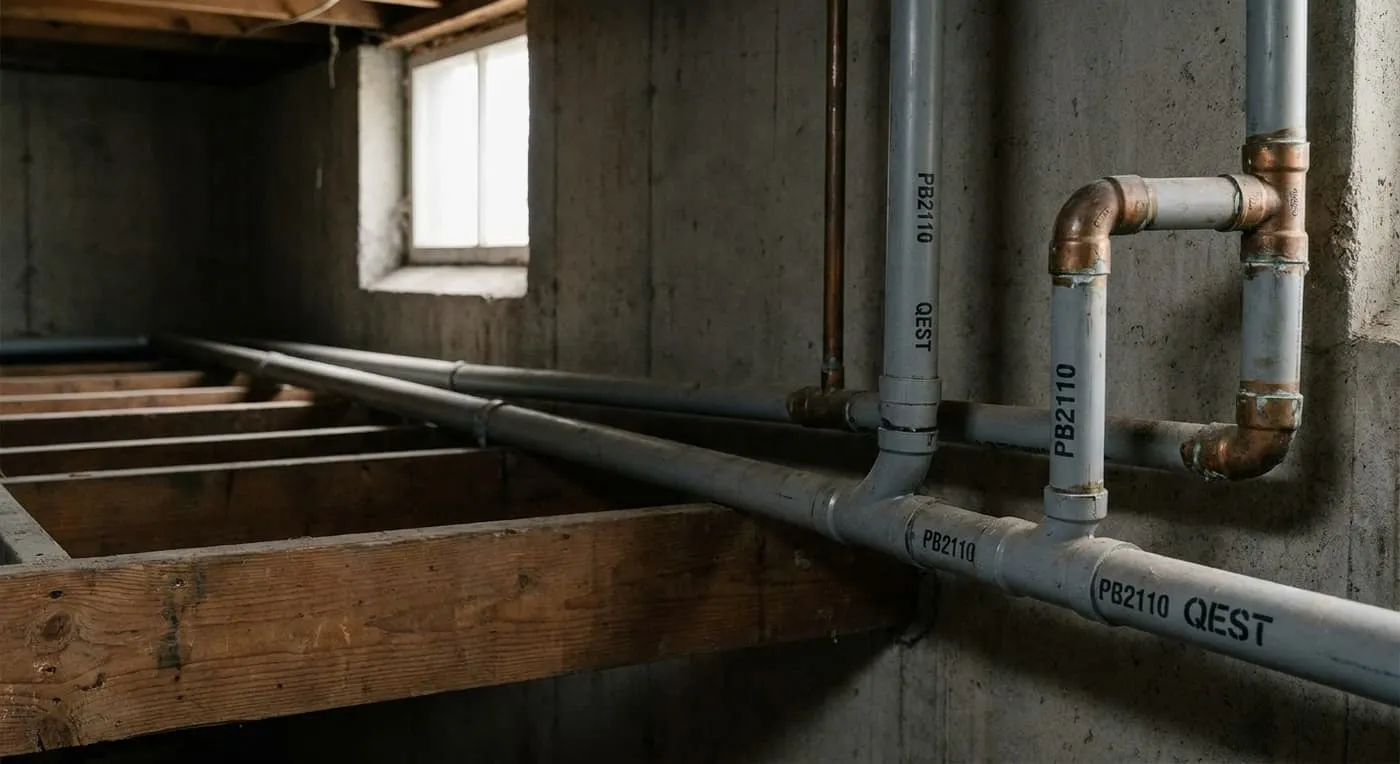
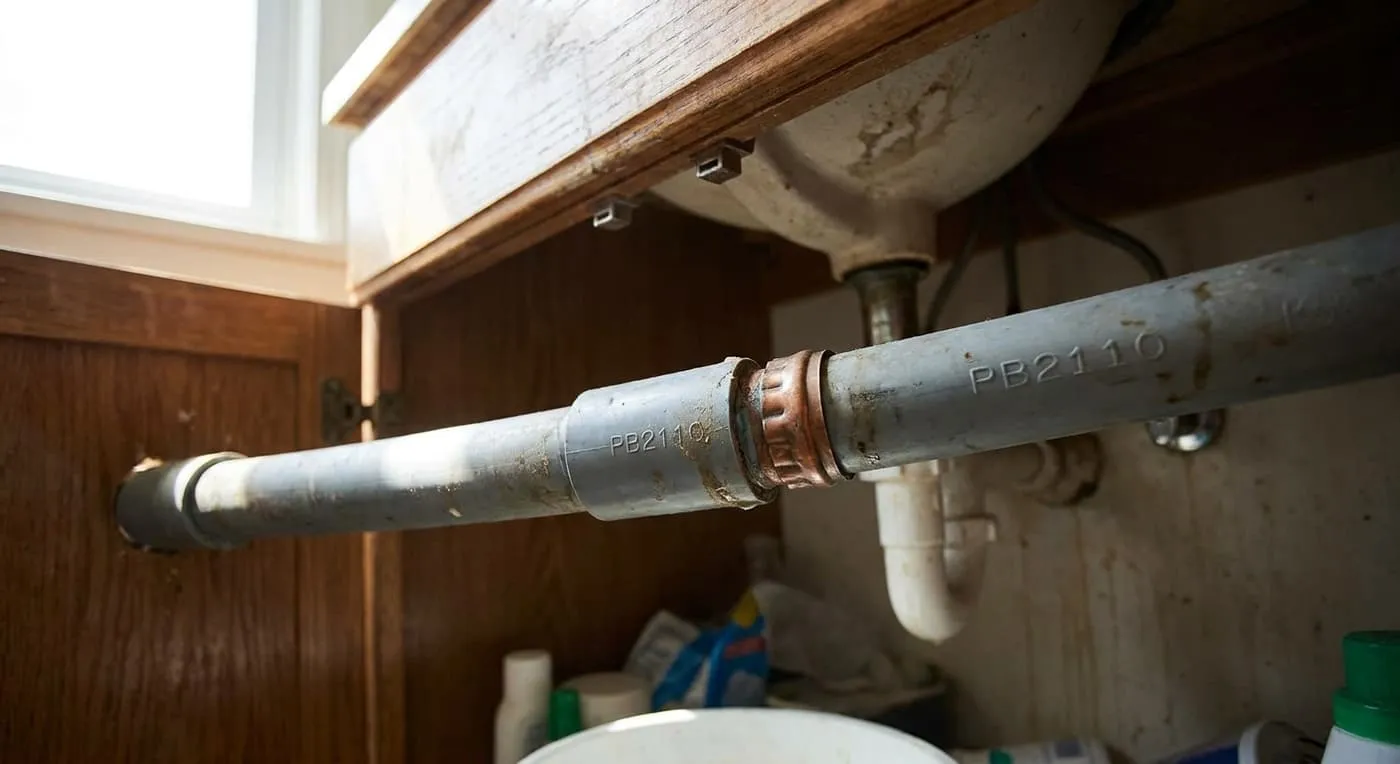
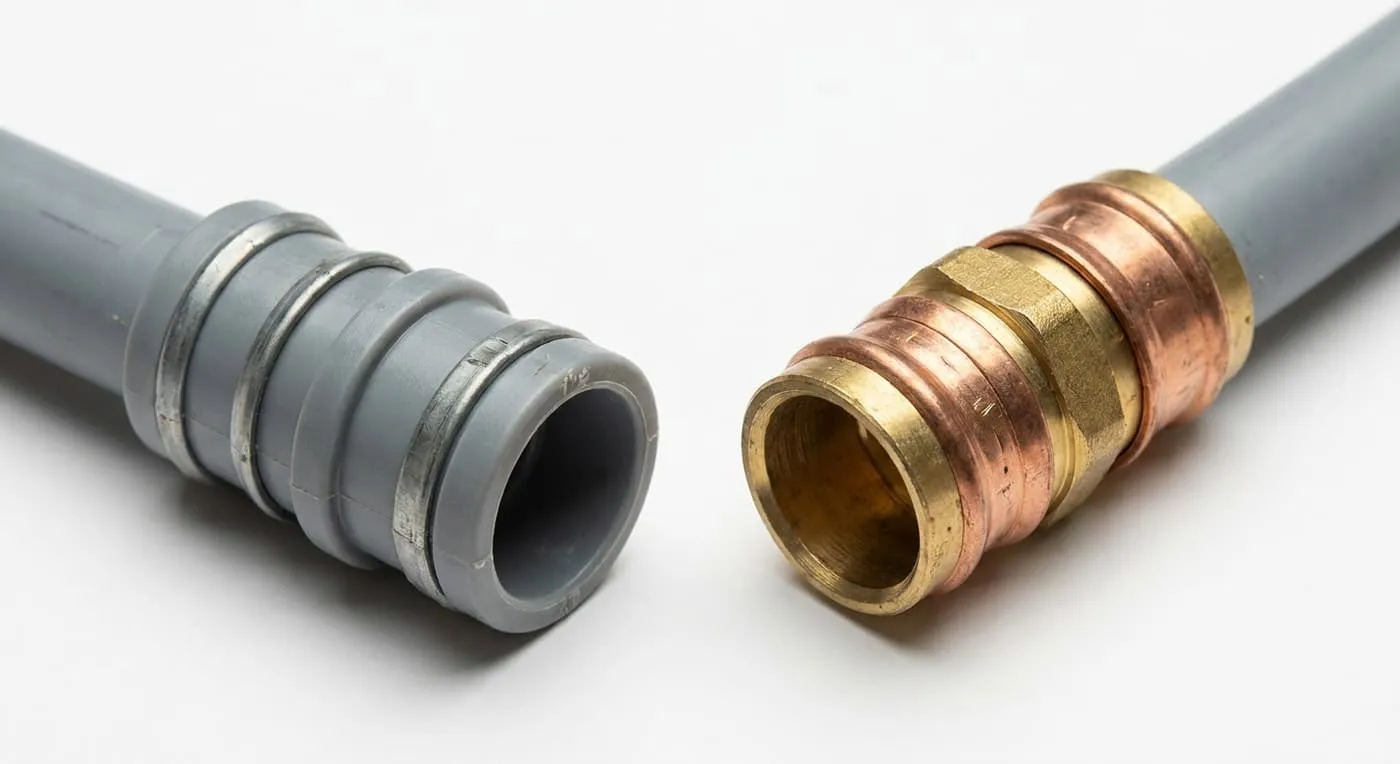
Poly-B is usually grey, but can also be blue, black, white, or red. Look for flexible plastic pipe with a slightly shiny surface. The most reliable indicator is printed markings such as “PB2110” or “CSA-B 137.8” along the side.
Common Locations to Check for Poly-B
- Under kitchen and bathroom sinks
- Near the hot water tank
- In utility rooms or mechanical closets
- On exposed ceiling joists in unfinished basements
- In crawl spaces
When to Consult a Professional Inspector
If the markings are not visible or you are unsure, a licensed plumber can confirm the pipe material. A professional inspection is especially useful before purchasing a home.
Why Poly-B Plumbing is Considered High Risk by Insurers
Documented Failure Rates and Leak Incidents
Poly-B systems have historically produced a higher frequency of water damage claims than copper or PEX. Many failures start as slow leaks behind walls, where they go unnoticed until significant damage has occurred.
Vulnerability to Water Quality and Chemical Degradation
Polybutylene is sensitive to chemicals used in municipal water treatment, particularly chlorine and chloramine. These chemicals degrade the pipe from the inside, making it brittle. Long-term exposure to hot water and UV light further shortens its life.
Potential for Extensive Water Damage
Because the pipe can fail without visible warning, a burst or crack may release water for hours or days before detection. This can lead to structural damage, mould growth, and extensive remediation—exactly the type of claim insurers want to avoid.
How Insurance Companies Respond to Homes with Poly-B
There is no single industry-wide rule. Each insurer sets its own underwriting guidelines, and responses range from standard coverage to refusal.
Underwriting Guidelines and Risk Assessment
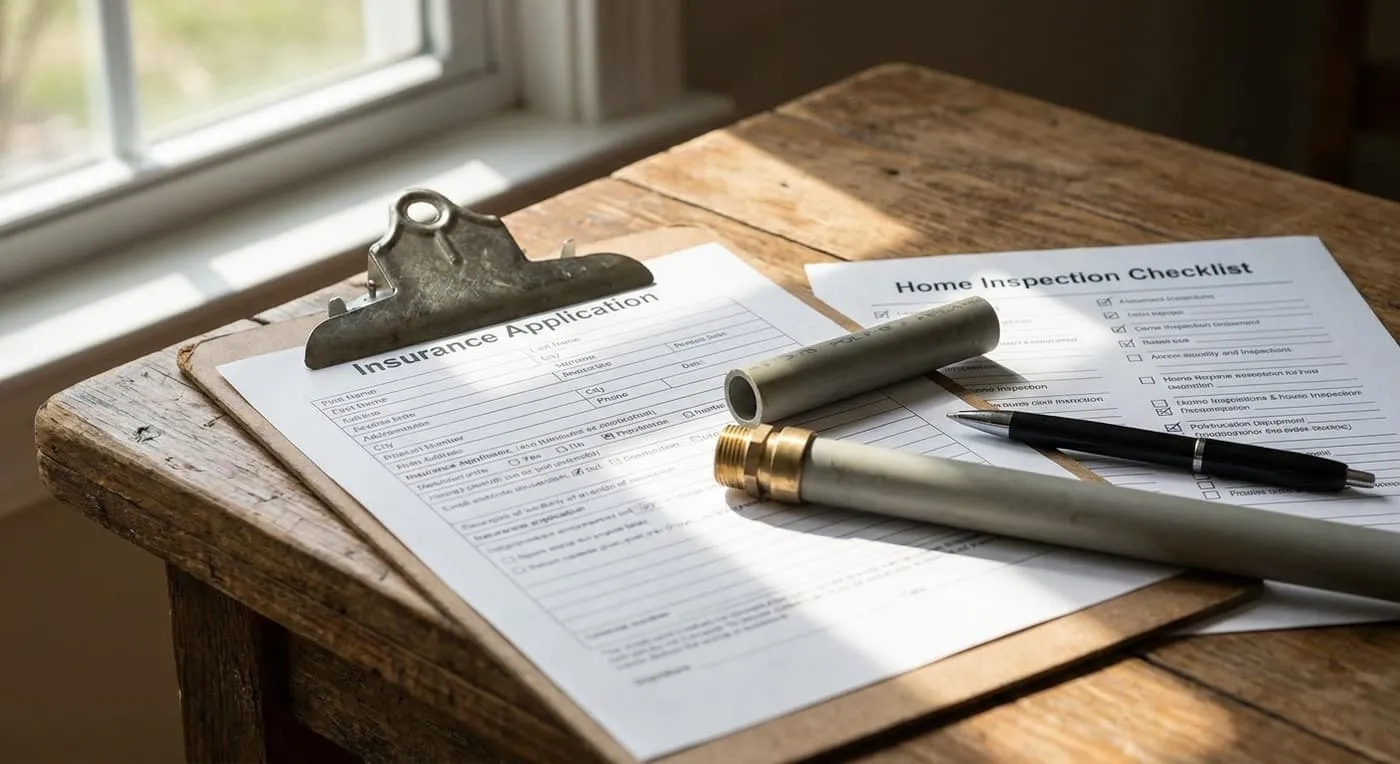
Insurers ask about plumbing material during the application process. They use claims history and material-specific risk data to decide whether to accept a risk and under what terms.
Common Coverage Conditions or Exclusions
- Coverage offered but with water damage exclusions or limitations
- Requirement to upgrade plastic fittings to copper or brass before coverage
- A deadline to replace the plumbing entirely
- Declining to provide property coverage
Impact on Policy Availability
Some standard markets will not quote a home with unremediated Poly-B. Others may accept it with added conditions. This variability makes it important to compare responses from multiple insurers.
Does Home Insurance Cover Poly-B Piping in Older Homes?
Yes, in many cases you can still obtain home insurance, but the terms often differ from a home with modern plumbing. The key is finding an insurer whose guidelines match your situation.
Availability of Coverage in the Current Market
Many insurers still provide coverage for homes with Poly-B, especially if the pipes are in good condition and fittings have been updated. However, coverage may be conditional.
Specialized Insurers or Programs
Some insurers and programs specifically accommodate older plumbing systems. Working with a broker who understands Poly-B can help identify carriers willing to consider the risk.
Conditions That May Apply (e.g., Leak Detection, Replacement)
Common conditions include installing leak detection devices or automatic shut-off valves, replacing acetal fittings with copper or brass, or committing to a full pipe replacement within a set timeframe. Meeting these conditions can keep a policy in force.
Regional Factors Affecting Poly-B Insurance Coverage
Where your home is located can influence how insurers view Poly-B, even though the material itself is the same everywhere.
Influence of Local Water Chemistry and Climate
Areas with aggressive water treatment chemicals or significant temperature swings often see faster Poly-B degradation. Insurers in those regions may be more cautious.
Prevalence of Poly-B in Older Housing Stock
In communities with a large share of homes built between 1978 and 1997, Poly-B is more common, and local underwriting practices may reflect higher claim volumes.
Regional Underwriting Trends
Underwriting appetites vary by market. Some regions have moved to stricter requirements, while others still accept Poly-B with relatively few restrictions. This is why local broker knowledge matters.
The Role of Pipe Fittings in Insurance Eligibility
Not all Poly-B systems are equal in the eyes of insurers. The type of fittings used to connect pipes can be just as important as the pipes themselves.
Plastic vs. Copper Fittings: Underwriting Preferences
Original Poly-B installations often used acetal plastic fittings, which are more prone to cracking and leaking. Many insurers now prefer or require copper or brass fittings and crimp rings.
How Fitting Upgrades May Improve Insurability
Replacing plastic fittings with copper or brass can improve your chances of getting coverage and may satisfy certain underwriting requirements. However, the pipes themselves remain Poly-B.
Considerations for Partial vs. Full Replacement
Upgraded fittings are a mitigation step, not a cure. Some insurers will still require full replacement of all Poly-B supply lines before offering standard coverage. A partial replacement may not remove all restrictions.
Steps to Take if Your Home Has Poly-B Plumbing
Taking a proactive approach can expand your insurance options and reduce the risk of a surprise non-renewal.
Consult with Insurance Professionals
Tell your broker or insurer early that your home has Poly-B. As brokers, we routinely compare how different insurers respond to Poly-B disclosures, which helps homeowners understand their options before committing to a policy.
Arrange a Plumbing Assessment
Have a licensed plumber inspect the entire system, check fittings, and document the condition. This assessment provides the factual basis insurers may request.
Explore Replacement or Mitigation Options
Depending on the assessment, you may choose to upgrade fittings, install leak detection, or plan a full pipe replacement. Discuss timelines with your insurer to see which options satisfy their requirements.
Document Upgrades for Insurance Purposes
Keep records of any plumbing work, including photographs, invoices, and a letter from the plumber confirming what was replaced. Submit this documentation to your insurer to update your policy.
Common Questions About Poly-B and Home Insurance
Is Poly-B the Same as PEX?
No. PEX is cross-linked polyethylene, a newer flexible plastic that is widely accepted by insurers. Poly-B is polybutylene, an older material with a documented history of failures. They are not interchangeable.
What is the Expected Lifespan of Poly-B?
With proper installation and favourable water conditions, Poly-B can last 20 to 30 years. However, exposure to chlorine, high heat, or poor fittings can shorten that lifespan significantly.
Should I Buy a Home with Poly-B Plumbing?
It can be a viable purchase if you account for the plumbing. Get a professional inspection, understand the insurance implications, and plan for possible upgrades or replacement. Some buyers negotiate repairs or factor replacement into their decision.
Will Replacing Poly-B Improve Insurability?
Yes. Replacing Poly-B with PEX or copper often removes the underwriting restrictions associated with the material and can open access to a broader range of insurance options.
Protect Your Home: Final Thoughts and Next Steps
Poly-B plumbing is a manageable risk, but it requires attention. The sooner you identify the material, understand your insurer’s view, and take mitigation steps, the better your coverage position will be.
Summarize Key Takeaways
- Poly-B was installed in many homes from 1978 to the mid-1990s and is considered higher risk.
- Insurers may still offer coverage but often with conditions such as fitting upgrades or leak detection.
- Fittings matter: copper or brass fittings are viewed more favourably than original acetal plastic.
- Full replacement is the most reliable way to improve insurability.
Encourage Proactive Plumbing Management
Do not wait for a leak or a non-renewal notice. Arrange an inspection, understand your options, and make a plan that fits your home’s condition.
Recommend Consulting Experts for Personalized Advice
Every home and insurer is different. Speak with a licensed broker who can compare responses across multiple carriers and guide you through the underwriting process. If you are ready to review your current policy or explore options for a home with Poly-B, contact us for a personalized assessment.