

When property damage strikes, one of the first questions that arises is exactly how home insurance deductible works in practice. A deductible represents the portion of a covered property loss that you agree to absorb before your insurance policy steps in to cover the rest. Rather than being a fee you pay upfront to your insurer, it is simply subtracted from your final settlement check.
With over 25 years of combined industry experience managing large portfolios, our team at InsureLine Alder has guided countless homeowners through the claims process. We believe in educating our clients in straightforward terms, ensuring you understand exactly how your coverage responds when you need it most.
What is a Home Insurance Deductible?
At its core, a deductible is a mechanism for sharing risk between you and your insurance provider. When a covered event damages your property, the insurance company agrees to pay for the repairs or replacement, but only after you have taken responsibility for your agreed-upon portion of the loss.
Our Managing Directors, Gurtaj Bahad (CIP, CAIB) and Michael Puni (Level 2 Insurance Broker), have built our practice on the principle of educating the client first. We always explain that your deductible is the threshold your claim must exceed before the insurance policy is triggered. If the total damage falls below this threshold, the policy will not provide a payout for that specific incident.

Flat Dollar Amounts vs. Percentage-Based Deductibles
Understanding how home insurance deductible works requires knowing the two primary ways these limits are calculated on a policy. Depending on your specific coverage, your deductible will typically be structured in one of two ways:
- Flat Dollar Amounts: This is a fixed, predetermined number, such as $1,000 or $2,500. Regardless of the total extent of the damage, this is the maximum amount you will absorb for a covered claim.
- Percentage-Based Deductibles: Instead of a fixed number, this deductible is calculated as a percentage of your home’s total insured value. For example, if your home is insured for $500,000 and you have a 2% deductible, your responsibility for a covered loss would be $10,000.
How the Deductible is Subtracted from Your Claim Payout
A common misconception is that you must write a check to your insurance company or broker when you file a claim. In reality, the deductible is simply withheld from the final settlement provided by the insurer.
For instance, if a severe storm causes $15,000 in covered damage to your roof and your policy carries a $1,000 deductible, the insurance company will issue a settlement check for $14,000. You are then responsible for combining that settlement with your own $1,000 to pay the contractors completing the repairs. At InsureLine Alder, we take pride in advocating for you with underwriters during the claims process, ensuring that your settlement is calculated accurately and that communication remains clear and professional.

Does the Deductible Apply Per Claim or Per Year?
If you are familiar with health coverage, you might assume that property deductibles accumulate over a calendar year. However, when explaining how home insurance deductible works, we emphasize that it almost always applies on a per-claim basis.
This means that every time you experience a distinct, separate incident of covered damage, the deductible applies anew. If a windstorm damages your property in the spring, and a separate fire causes damage in the winter, you will be responsible for the deductible for each individual claim.
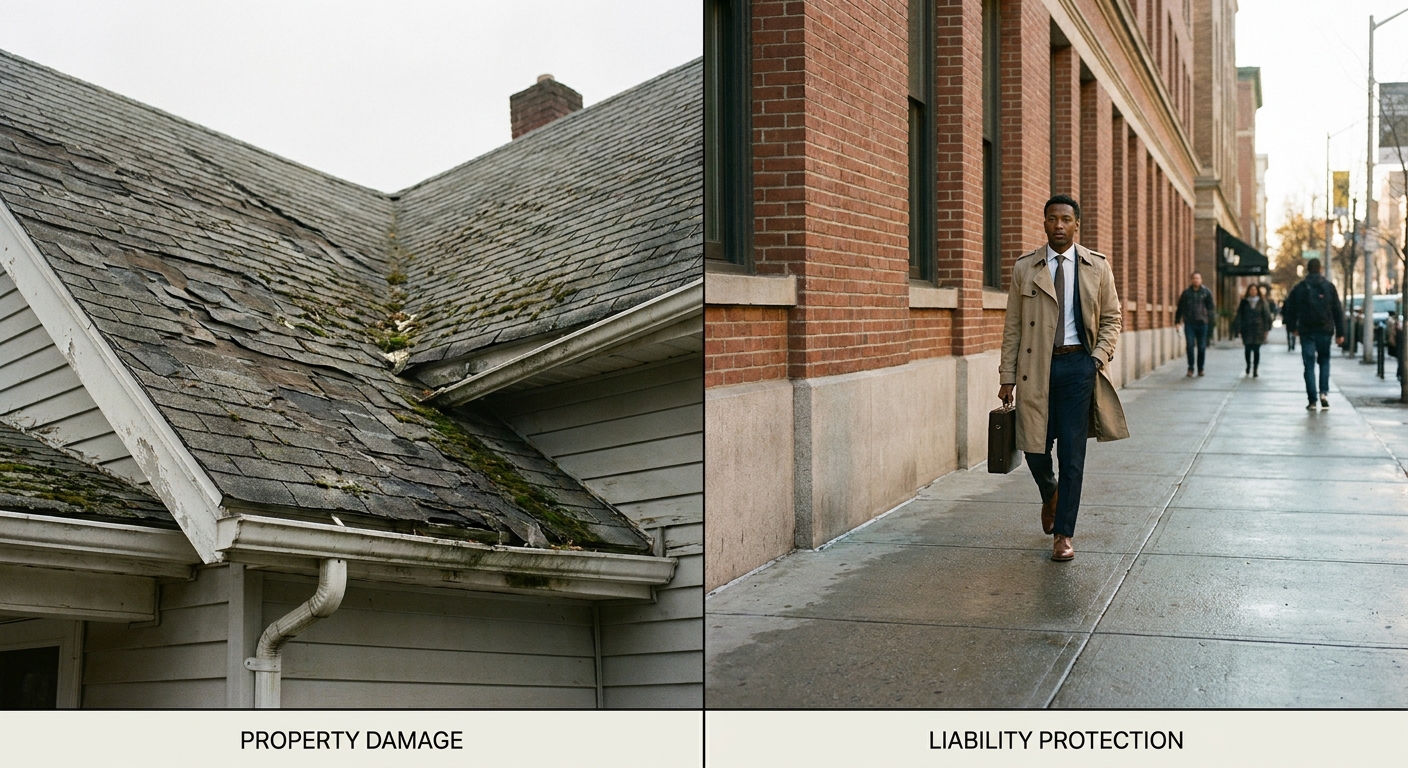
Property Damage vs. Personal Liability Claims
It is critical to distinguish between the different types of coverage within your policy, as deductibles do not apply universally to every situation.
- Property Damage: Deductibles apply when you are claiming damage to your own physical structure or personal belongings.
- Personal Liability: If a guest is injured on your property and brings a lawsuit against you, the liability portion of your policy responds. In almost all standard policies, there is no deductible applied to liability defense or settlements.
Specialized Deductibles for Earthquakes and Inland Floods
While standard perils like fire or wind typically fall under your primary deductible, catastrophic natural disasters often carry their own specialized terms. Because events like earthquakes and inland floods have the potential to cause widespread, total losses, insurance providers usually apply separate, higher deductibles for these specific risks.
These specialized deductibles are frequently percentage-based. Maintaining a 95% client retention rate means we prioritize proactive conversations about these specific risks. We ensure early identification of coverage gaps so you are never caught off guard by a specialized deductible buried in your policy documents.
Situations Where Your Deductible May Be Waived
There are specific scenarios where you may not have to absorb your deductible at all. Depending on your policy wording, insurers sometimes include a large loss waiver. This clause dictates that if the total covered damage exceeds a certain high threshold, the insurance company will waive the deductible entirely and cover the full amount of the loss.
Additionally, if your property is damaged due to a neighbor’s proven negligence, your insurer may waive your deductible or recover it later through a process called subrogation. Assisting clients during the claims process to identify these waivers is a core part of our service.

Conclusion: Reviewing Your Policy and Deductible Limits
Understanding the exact mechanics of your policy ensures you are prepared when the unexpected happens. Your deductible should align with your comfort level and your ability to absorb a portion of a loss at a moment’s notice.
At InsureLine Alder, we stand by our 24-hour response guarantee and our commitment to reviewing your policy every year to ensure you always have the best coverages. We provide continuous updates on your insurance status throughout the process, tailoring the right solutions that fit your exact needs. If you have questions about your current limits or want to ensure your policy structure matches your lifestyle, our experienced team is here to provide clear, professional guidance.
A deductible buy-down policy can reduce what you pay out of pocket on large claims; we explain how it works and when it makes sense.