
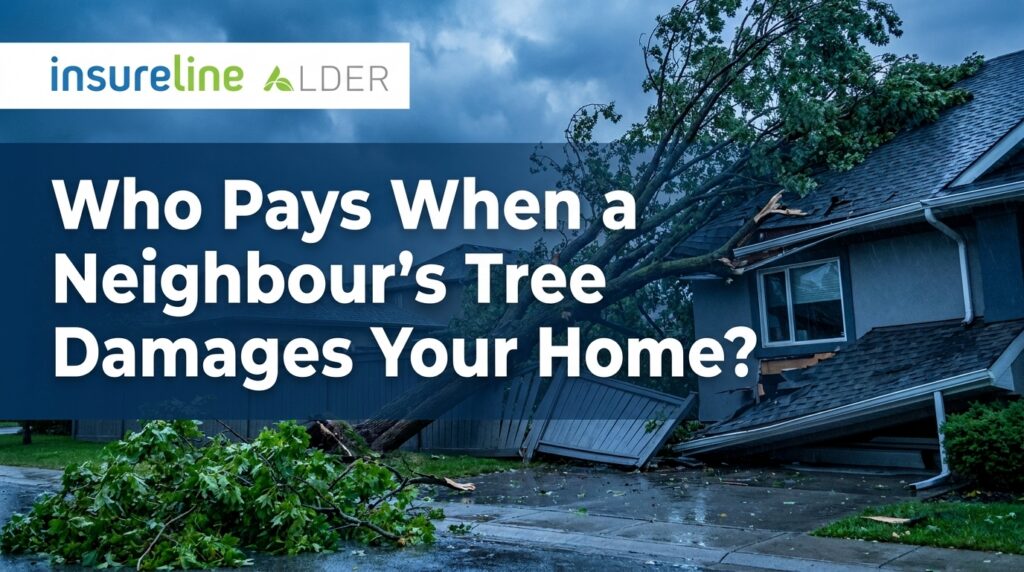
When a neighbour’s tree comes down during a windstorm and damages your home, the first question is often: who pays? Fallen trees and windstorms trigger many home insurance claims, but the answer depends on whether the tree was a foreseeable hazard, how severe the weather was, and what your policy covers. Understanding these factors before you file a claim can protect your financial interests and help you avoid disputes with neighbours.
In most cases, a homeowner is responsible for damage caused by a tree on their own property, even if the tree itself was healthy. But if the neighbour knew or should have known the tree was hazardous and failed to maintain it, they may be liable. We will walk through how to assess tree condition, evaluate weather severity, and take the right next steps after a fallen tree damages your home.
Assessing Tree Condition and Maintenance
Liability for a fallen tree often turns on whether the tree was a foreseeable hazard. If a reasonable property owner would have noticed signs of decline and removed or pruned the tree, the neighbour may be responsible for the damage. If the tree was healthy and well-maintained, the loss is usually considered an accident, and your own insurance may need to respond.
Factors that increase the risk of tree failure during windstorms
Certain conditions make a tree much more likely to fail even in moderate wind. When you assess a neighbour’s tree after a storm, consider these common contributors:
- Saturated soil: Heavy rain before or during a windstorm softens the ground, reducing root anchoring. Trees with shallow root systems are especially vulnerable.
- Root damage: Construction, trenching, or soil compaction near the base can sever or crush roots. Studies of wind-thrown trees found that most had damaged lateral roots or lost descending roots.
- Slope and shallow soil: Trees on steep slopes or in thin soil often have shallow roots that cannot resist strong lateral forces.
- Wet snow or ice: Accumulation adds weight to branches and can weaken the tree before high winds arrive.
- Recent drought: Extended dry periods can stress trees and make them more brittle, so a later rain and wind event can lead to sudden failure.
- Full leaf canopy: Trees in leaf catch more wind, increasing drag. Early season storms when leaves are present can cause more damage than winter storms of similar wind speed.
- Exposure: Trees newly exposed by clearing or development may not have developed wind resistance, increasing the chance of windthrow.
Identifying a hazardous tree: Signs homeowners should look for
If you are concerned that a neighbour’s tree might fall, look for these visible indicators. Documenting them with photos before a storm can strengthen your position later.
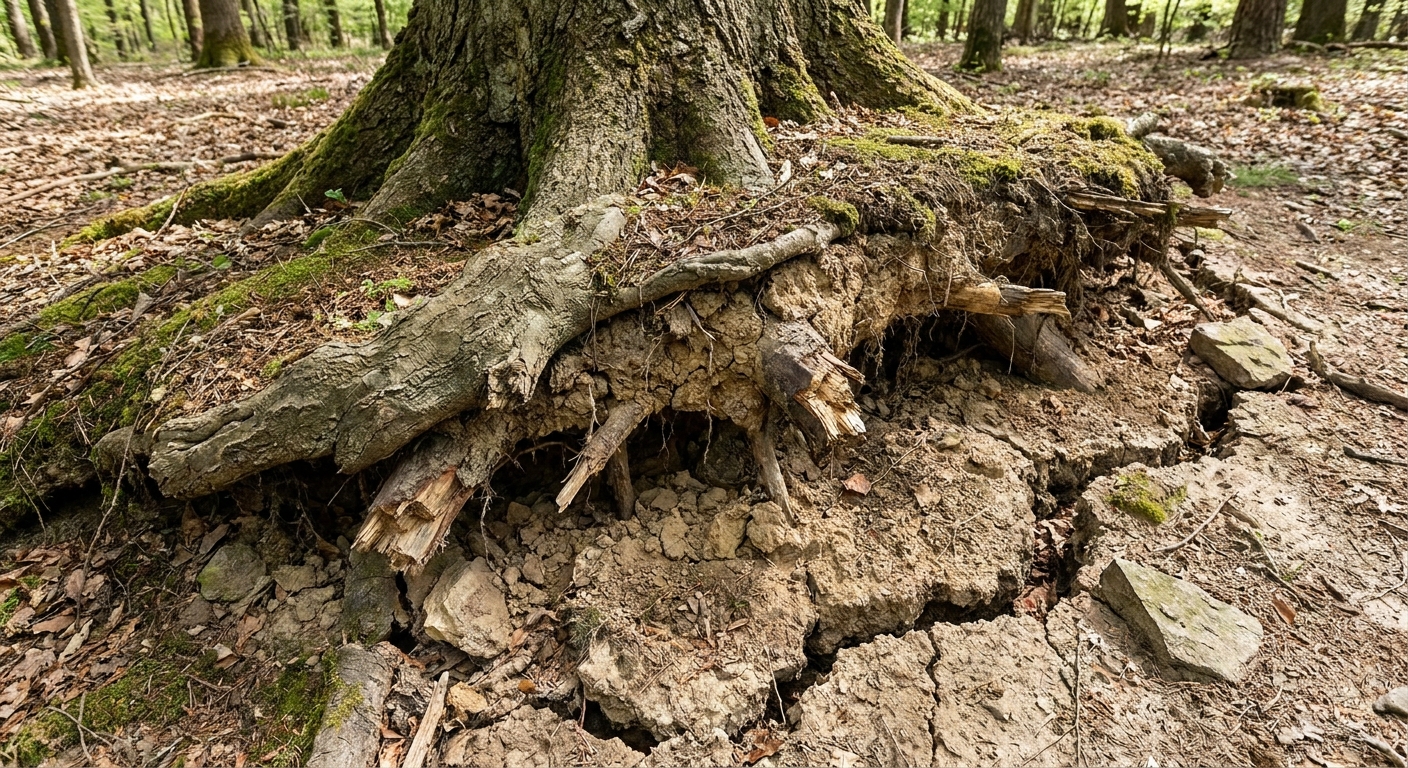
- Lifting root plate: Soil heaving or cracks around the base indicate the tree is already leaning and losing anchorage.
- Dead or broken branches: Large dead wood in the canopy is a clear sign of decline and a source of falling debris.
- Cracks or splits in the trunk: Structural defects reduce the tree’s ability to withstand wind loads.
- Fungal growth or decay: Mushrooms at the base or conks on the trunk suggest internal rot.
- Lean: A sudden or pronounced lean, especially with soil mounding on the opposite side, is a red flag.
- Thinning foliage: Sparse leaves or early color change compared with nearby trees of the same species can indicate stress.
The role of tree maintenance and site conditions in windthrow
Regular maintenance can dramatically reduce the risk of windthrow. Pruning to thin the crown lowers wind resistance, while removing dead or weakly attached branches prevents them from breaking. Avoiding root disturbance is equally important; trenching, paving, or even repeated heavy traffic over the root zone can compact soil and damage roots. If a tree has been properly maintained and still falls in an extreme storm, the owner is less likely to be considered negligent.
Understanding Weather Severity and ‘Act of God’ Defenses
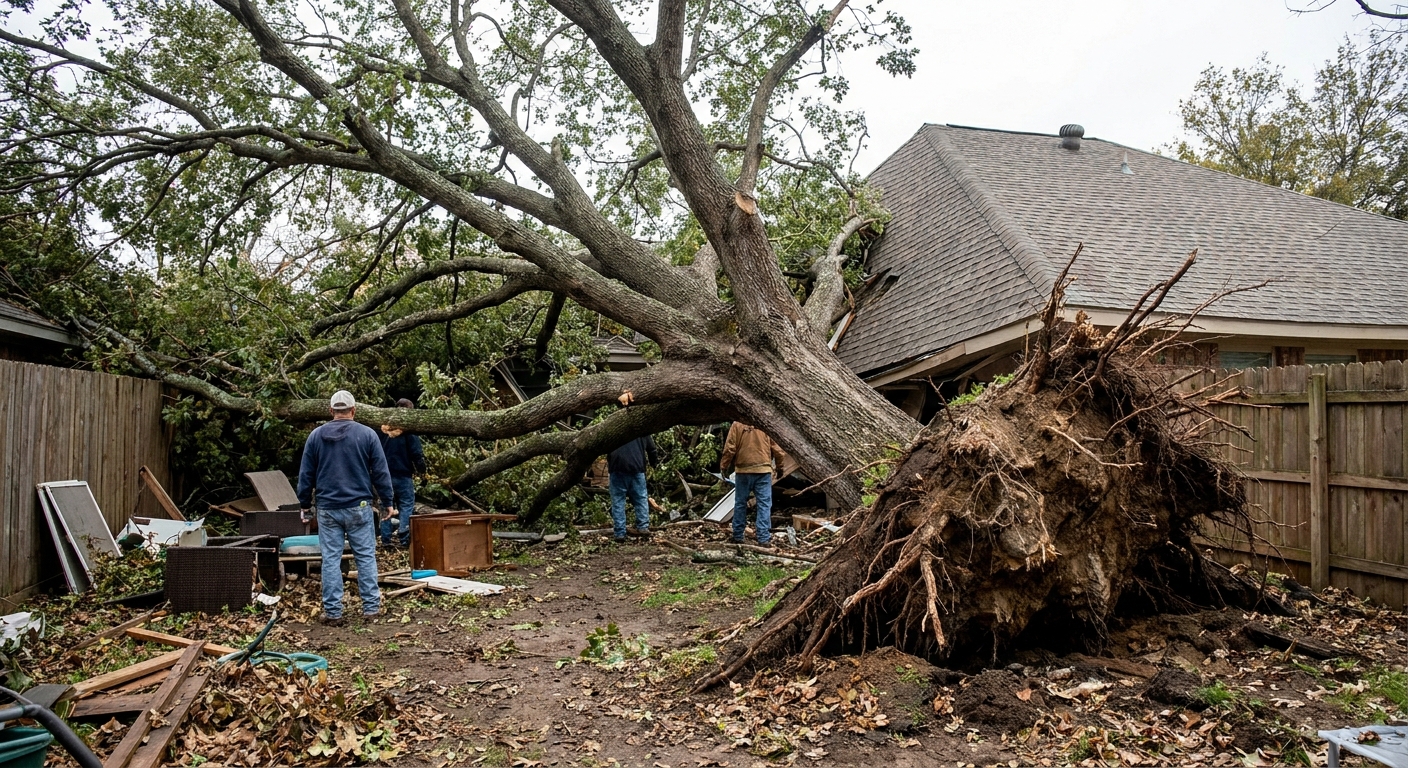
Even a well-maintained tree can fail when winds are extreme enough. In legal and insurance terms, an ‘Act of God’ is an event so unusual and overwhelming that no reasonable person could have prevented the damage. If the windstorm qualifies, the neighbour is generally not liable, and each property owner’s insurance typically covers their own losses.
Wind speed thresholds and ‘Act of God’ considerations
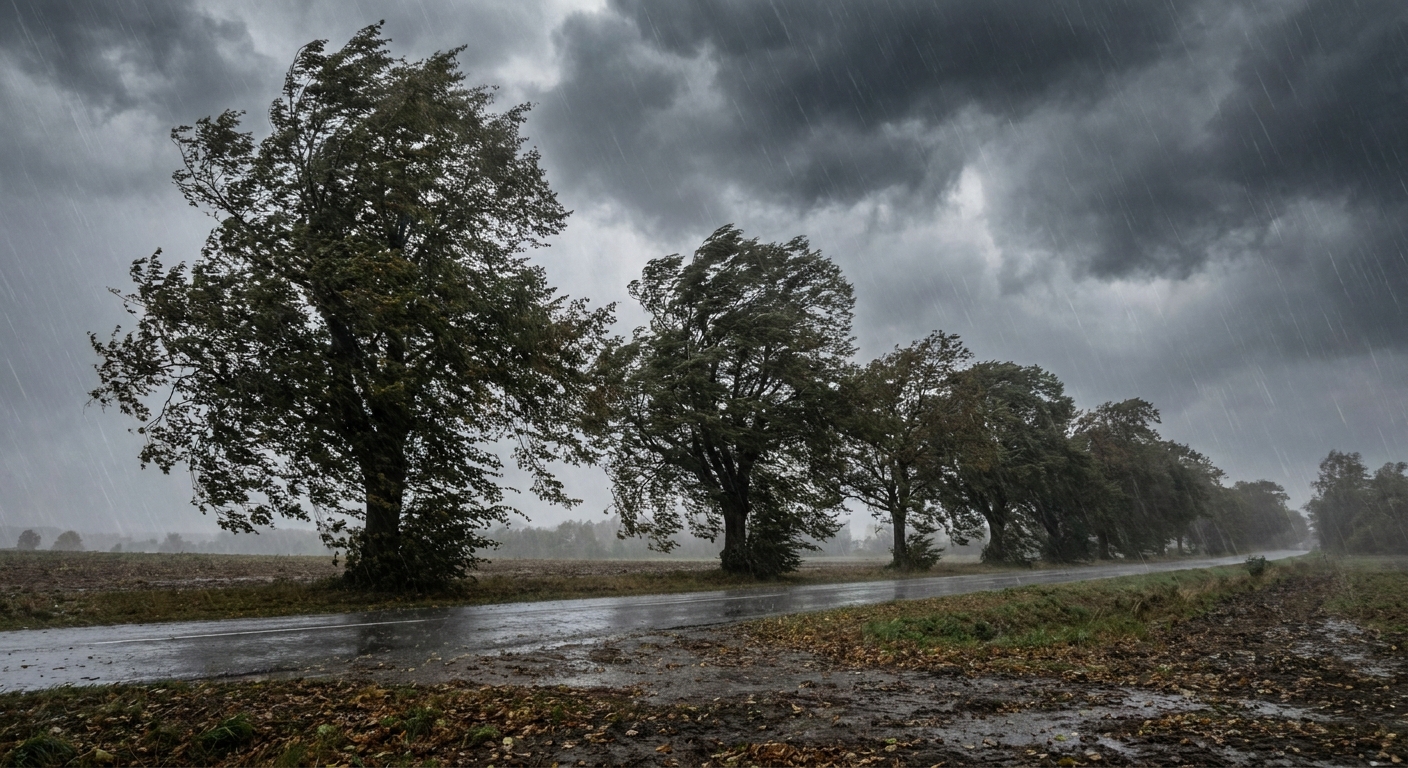
There is no single wind speed that automatically makes a storm an Act of God, but general thresholds help. Branches and small limbs may start failing when gusts reach about 50 km/h (30 mph). At sustained or gusting winds above 65 km/h (40 mph), major structural damage to healthy trees becomes more common. However, the defence weakens if the tree was already hazardous: a rotted or leaning tree that falls in a moderate storm is not an Act of God, because the failure was foreseeable.
We often see claims hinge on whether the wind event was exceptional or the tree was already failing. That is why we offer a 24-hour response guarantee when you need urgent policy guidance after a windstorm.
Next Steps: Protecting Your Rights and Resolving the Claim
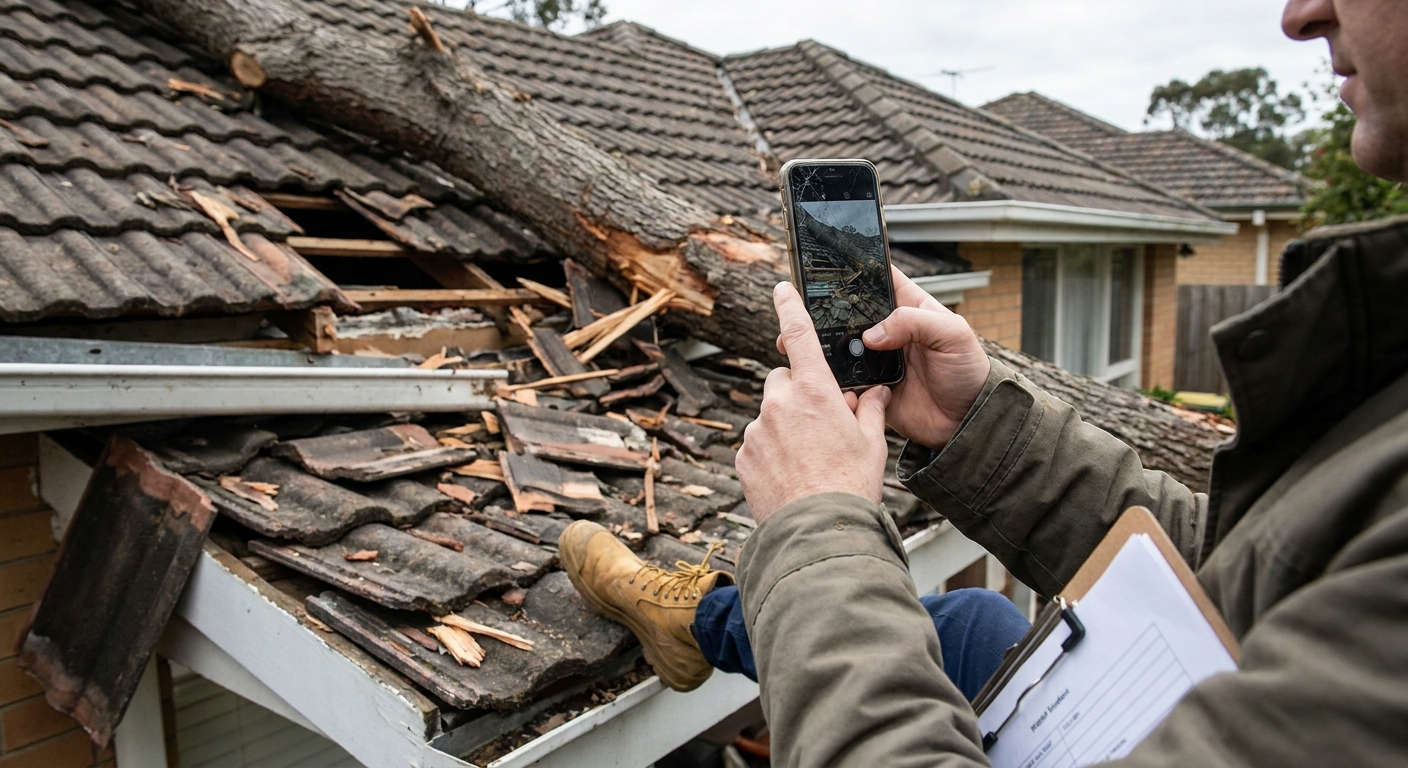
After a neighbour’s tree damages your home, take immediate steps to document the scene and protect your claim. Do not remove the tree or alter the area until you have photographed it and, if possible, obtained an arborist’s opinion on why it fell.
- Photograph everything: Capture wide shots of the tree and damage, close-ups of the trunk base, roots, and any defects. Video can show the tree’s position relative to the house.
- Preserve evidence of tree condition: Note any signs of rot, dead branches, or soil disturbance before cleanup begins.
- Notify your insurer promptly: Report the claim and ask whether your policy covers fallen tree damage and debris removal. Your insurer may seek recovery from the neighbour’s insurer if liability is clear.
- Get an arborist report: A certified arborist can assess whether the tree failed due to a maintenance issue or an extraordinary wind event. This report is often key in disputes.
- Communicate carefully with the neighbour: Avoid admitting fault or making promises. Exchange insurance information and let the adjusters sort out liability.
- Review your own coverage: Understand your deductible and whether additional living expenses are covered if your home is uninhabitable.
If liability is unclear or the damage is significant, consult a legal professional who understands property and insurance law. We recommend documenting everything in writing and keeping a timeline of events.
If you need help reviewing your policy after a fallen tree, we are here to guide you through the process.
Before you start repairs, make sure you understand how a home insurance deductible works so you can estimate your out-of-pocket on a fallen-tree claim.